Doing the Dodd
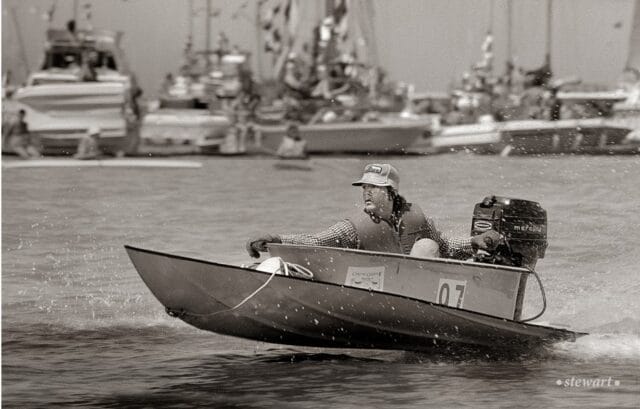
Nanaimo is apparently famous for some kind of custard slathered chocolate wafer and a motorized bathtub race. It’s named for the people indigenous to the area, the Snuneymuxw. If you look closely, you can see how it’s a phonetic interpretation in the usual clumsy manner. During World War I, Nanaimo had an internment camp for Ukrainians who, at the time, were just considered to be a bunch of suspicious Austro-Hungarians. It’s also the home town to a guy I met when teaching at Deep Springs College during the pandemic. He’s a friend of mine, but we butt heads politically and culturally. Importantly, Nanaimo is full of black rabbits. Seriously, the little bastards are everywhere. And Nanaimo once had a flamboyant pirate mayor. You heard me.
In spite of all these things–or, more likely, because of them–I found Nanaimo to be charming. We were able to fix the head due to great service from the folks at Harbour Chandlery and their fast parts-sourcing wizardry. We also met up with Brion and Mistilynn from SV Zube, a sister boat to ours (same model and manufacturer). Our Hallberg Rassy 39 had a production run of a couple hundred units and they are scattered around the world, so it’s not everyday you get to see something that’s the same but different. Brion and Mistilynn are also more experienced sailors and know quite a bit about the Salish Sea area. Plus, they’re good peeps.
Also, I will return to Nanaimo for as long as it’s possible to go to Brix and Mortar Socialhouse and buy jalapeño cheese bread. It’s very similar to bread I grew up with at Schat’s Dutch Bakery in Bishop, California, only better. I may get death threats for saying that, but it’s true, even though this place spells bricks with an “x.” With our big city business concluded, our desire was to head north further up the inside passage, but wildfires in the beautiful mountains of British Columbia were generating a lot of smoke, which was settling into the inlets and bays further north. The smoke sent us toward the Gulf Islands, which is the Canadian side of the San Juan Islands.
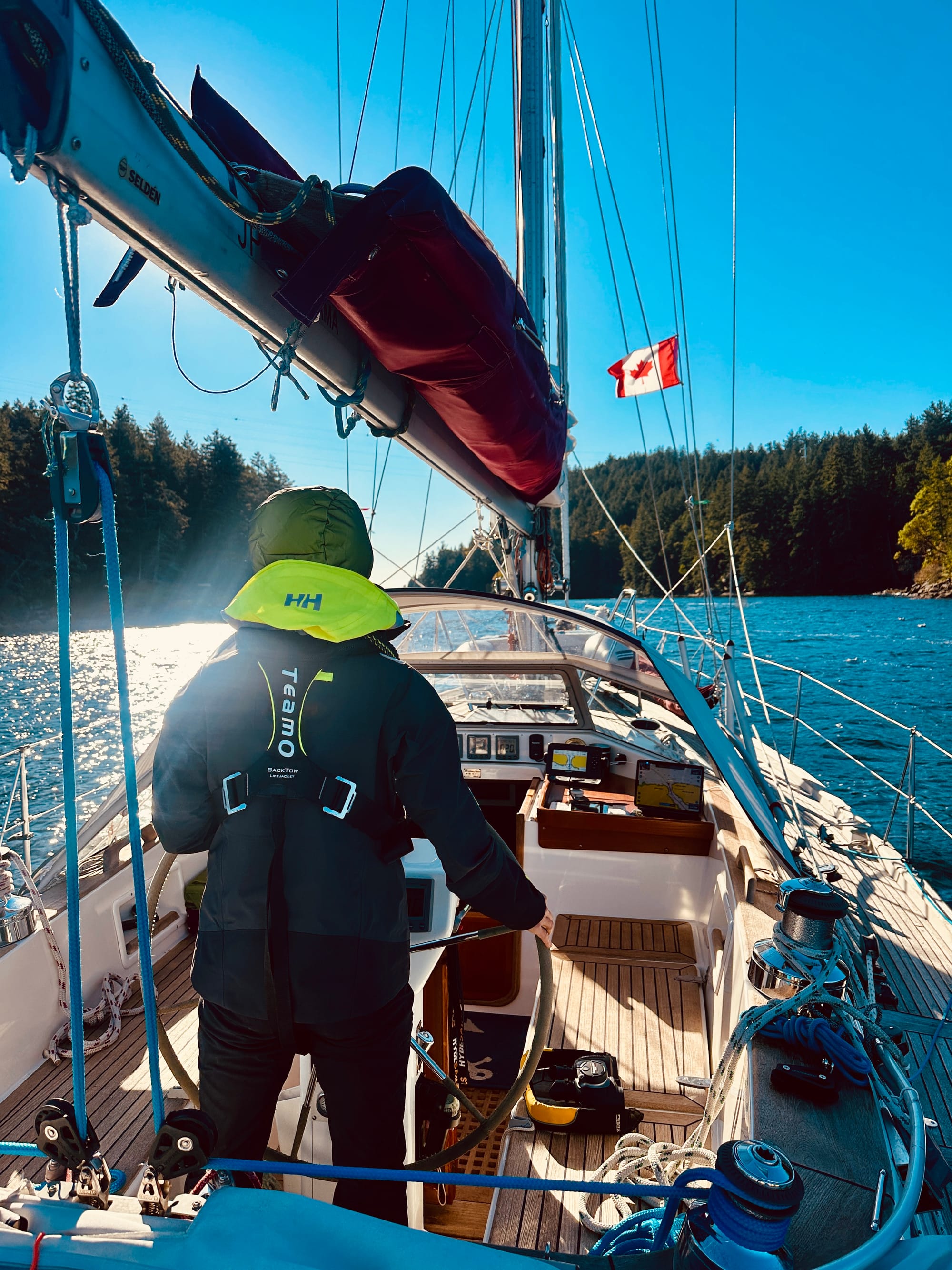
We left Nanaimo and puttered toward Dodd Narrows. This would be our first tangle with any of the many narrow channels in British Columbia where the land-strangled waters supercharge the current, up to around 9 knots at a fully steaming Dodd Narrows, quite a bit stronger than we’re able to motor with our turbo-charged 60hp Volvo. The trick is to arrive at slack tide, when the current is as still as possible between tidal swings. We arrived early, cautious to assure correct timing and make sure we got in line to get through near slack if it was a busy day. Monitoring channel 16 on the VHF radio, we learned the custom was to announce the size and type of vessel you were piloting before heading into the Narrows. Shortly after motor vessel “Hippie Smasher” announced its passage southbound at 18 knots of speed, the Victoria Coast Guard came on to beg everyone to shut up and only announce your passage if you were large enough to constitute a true hazard to navigation. So we stopped rehearsing our announcement and barrelled into the narrows in silence.
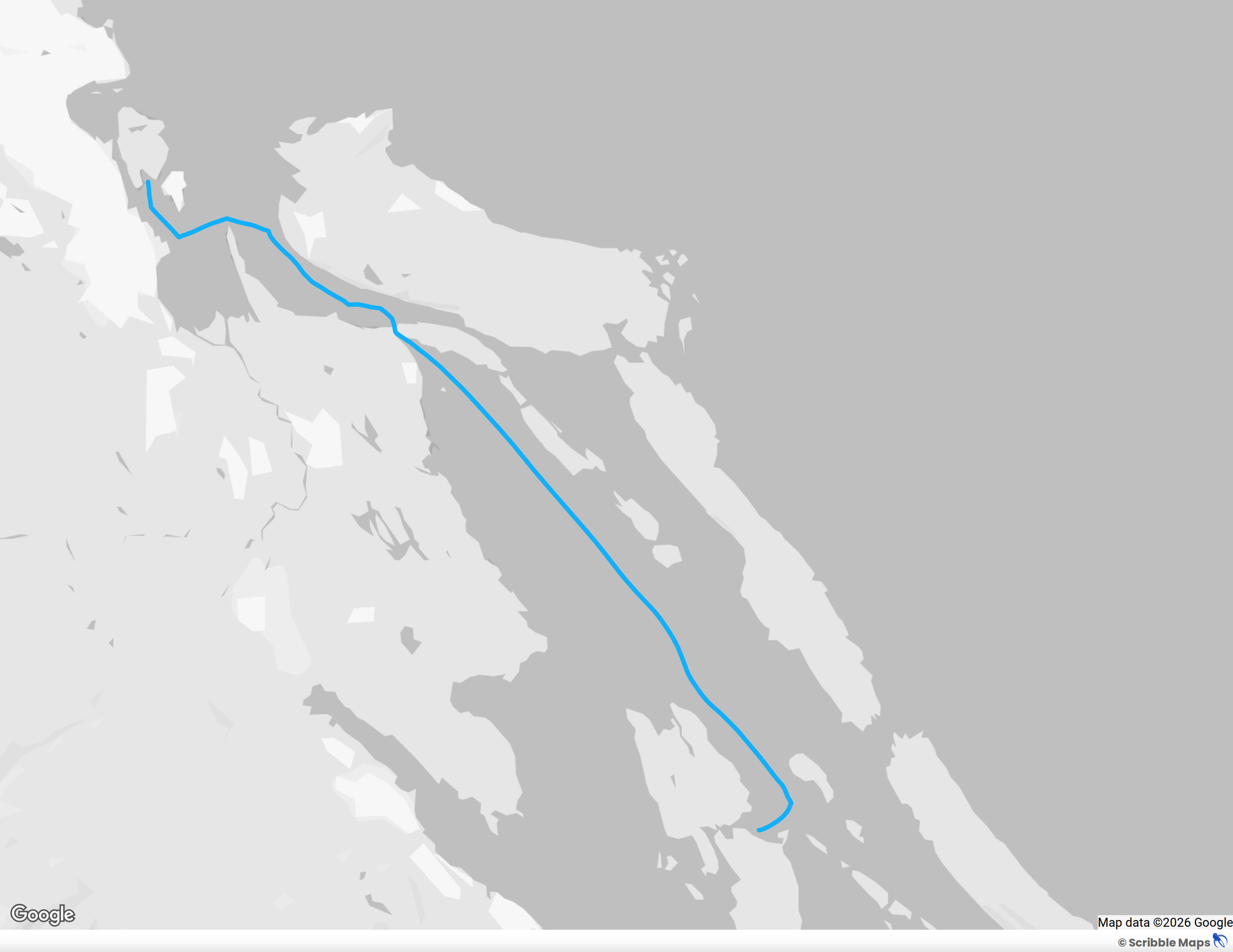
As is the case with most (but not all) passes, the powerful current and eddies were nearly non-existent during the slack tide. So we entered into the protected waters of the Gulf Islands accompanied only by the drama of the fantastic landscape.
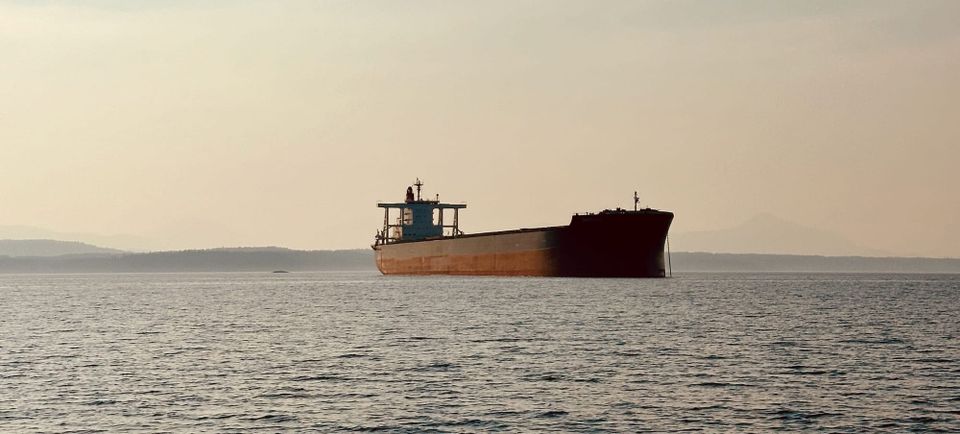
I had not been prepared for the stoniness of British Columbia and the Gulf Islands. I don’t know what I imagined these islands and coastlines were made of, what vague strata was hoisting all of these trees above water, but much of it turns out to be protrusions of sandstone and shale, ghostly cliffsides and long, reaching fingers of stone. It’s a haunting and poetic interplay between sea and land made even more dramatic and strange by the use of these waters as overflow moorage for tankers waiting for loading at Vancouver Harbour.
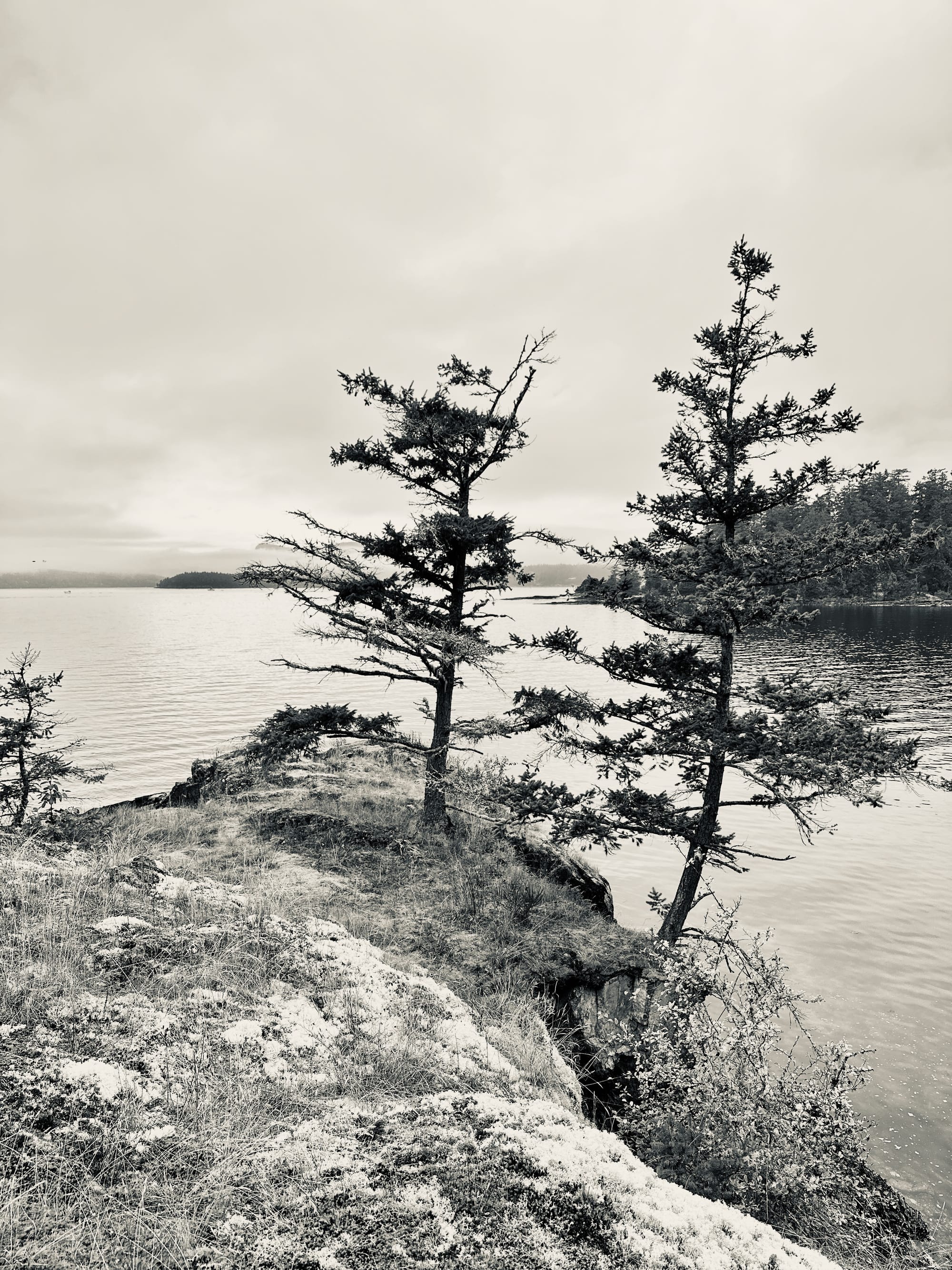
Coming around a mist-wrapped island bristling with fir, hemlock, and cedar sprinkled with peeling, red madrones—a habitat so primordial and removed from any sense of time that it might plausibly be populated with dinosaurs—only to find a spectral freighter rising from the water, silent and hulking, and the matrix definitely glitches. We rested at anchor for one night in Clam Bay, an easy anchorage if you are able to avoid worrying too much about all the old, anchor-snagging machinery that has been dumped onto the bottom. But the weather was settled and the night beautiful as the first fallen red-brown bigleaf maple leaves floated past in indication of a fast approaching Autumn.
Never necessary, always accepted with gratitude, no subscription required
Member discussion