Gybe Turkey
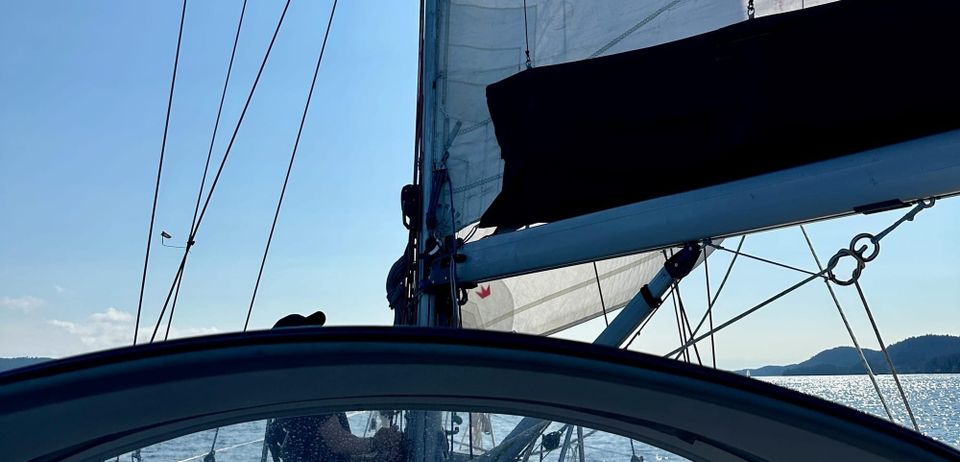
After facing down gale-worthy gusts, buck naked in a midnight thunderstorm, my pale flesh and the crashing waves juxtaposed in sudden flashbulb sprays of lightening, the calm morning was balm to my adrenal glands. The weather felt right for a scoot to Nanaimo, just a "jump to the left" as Dr. Furter might say (RIP Tim Curry).
We really weren't looking to go to a city of any size again so soon, but it seems one steadfast rule of traveling by boat is that as soon as you depart, things will begin breaking. A subset of this rule is for neglected and unused things to almost immediately fall to pieces. And so it was with our toilet. Or, as one is duty-bound to refer to it on a boat, "the head." This traditional nomenclature stems from the era when the toilet was out over the bow (or front, or head) of a sailing ship, so oncoming waves could manage janitorial duties. A simple and practical system, if somewhat exposed to the elements.
These days, marine toilets are still fundamentally fairly simple devices, but they frequently rely upon a small rubber part called, unironically, a joker valve. And where can one find such a thing? At a ship chandlery of course. Basically, a hardware store for boats. So Nanaimo it was.
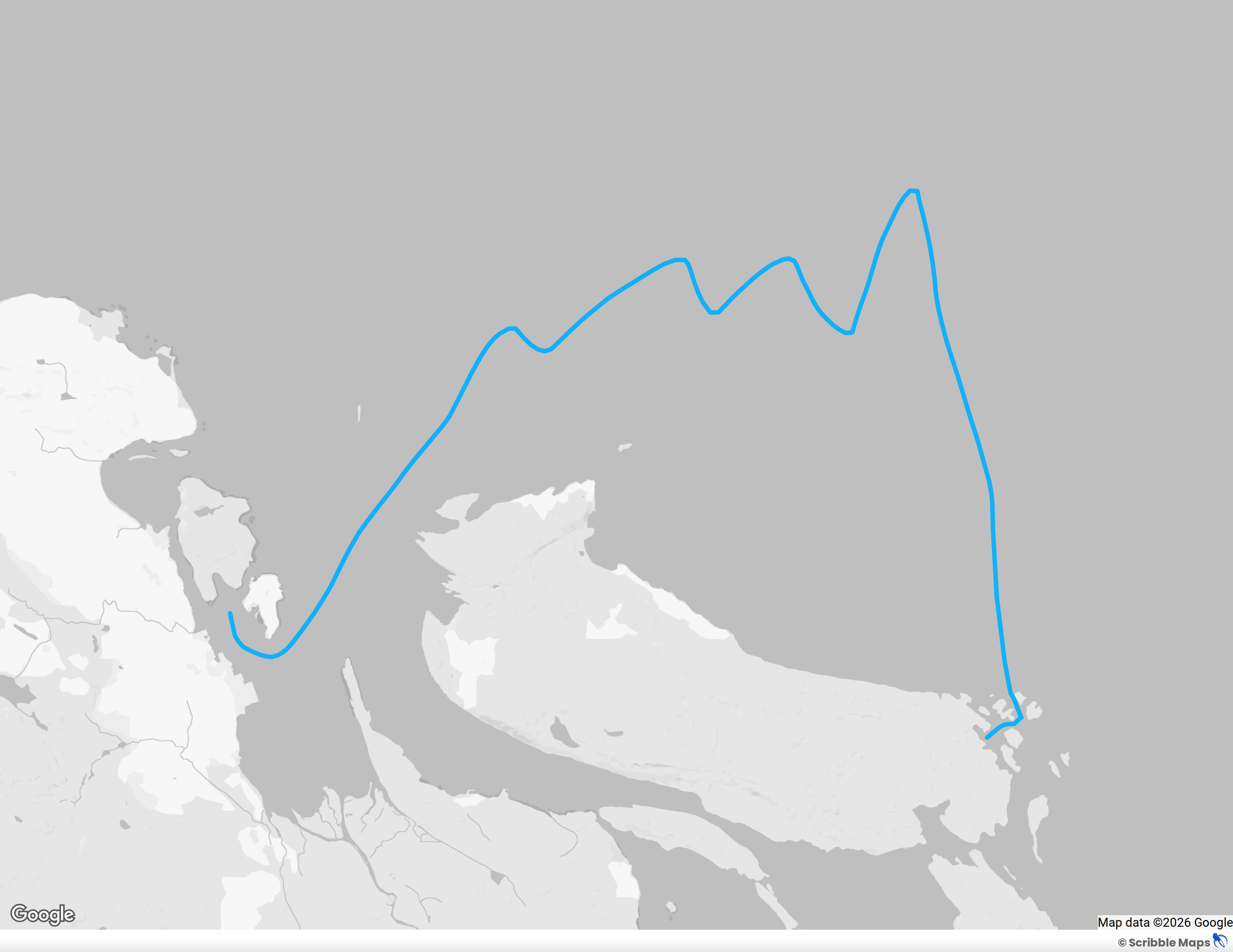
Early in the day and close to land the winds are frequently noncommittal, like that friend you're hoping to hang out with but you're just not sure if they enjoy your company as much as you enjoy theirs. Once out in the strait, though, the wind just can't help itself.
In relation to the wind, the sailboat wants to be anywhere but directly inline with it. Going straight into the wind is impossible. It's called being "in irons," a term borrowed from the grim fact that a prisoner in shackles is immobilized. Heading dead downwind is entirely possible, but can induce some uncomfortable wallowing and is best achieved with some specialized equipment and rigging, none of which we have on board at the moment. And, as mentioned, the boat is happier and more in balance at least a few degrees off from the exact wind direction.
All of this to say sailboats don't travel in straight paths. The route must work with the wind available, alternating back and forth across the wind direction to make progress, constantly moving in something of a zigzag. When sailing toward the oncoming wind, you are tacking. When sailing away from the wind, you are gybing (or jibing, from jibe, rhymes with jive). I don't know why the British spelling feels more natural to me. I prefer grey to gray and gybe to jibe. Perhaps the British spell it with a "g" because over there a jibe would be an insult, as opposed to a jape, which would be something along the lines of a critical toilet component being called a "joker valve."
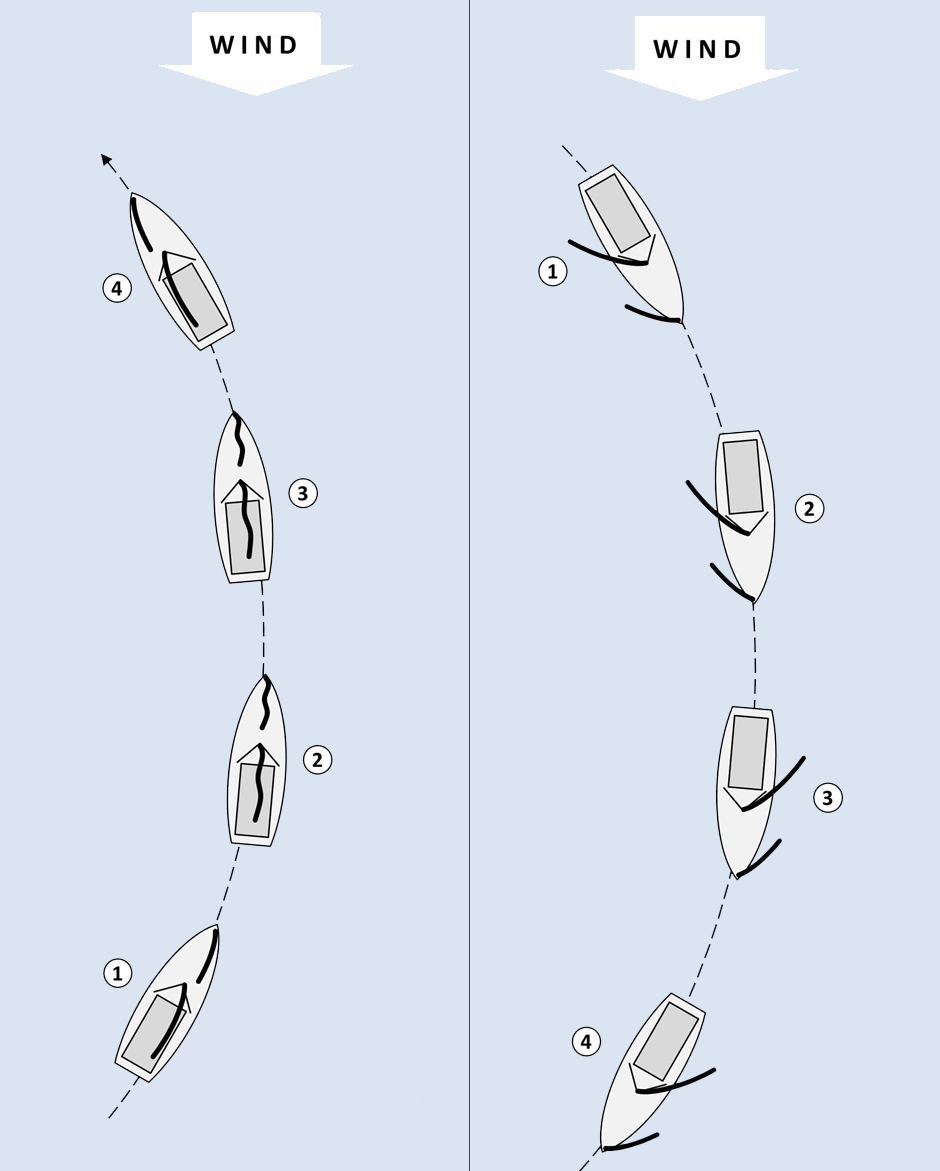
Tacking is generally easier and safer than gybing. When tacking upwind, the force of the wind on the sails is toward the centerline of the boat. When gybing downwind, the sails are being pushed away from the boat and the large mainsail and boom (the solid horizontal spar at the bottom of the sail and perpendicular to the mast) can swing quickly across the boat generating mind-bending, as well as skull-crushing, amounts of force.
I reckon that's enough sailing 101 for now, but the gyst of the gybe is that sailing downwind requires extra attention to proper process and protective protocols. Precautions aside, it was glorious to be out on the open water, sailing toward Nanaimo, zigging our zag toward a soon-to-be-repaired head. And, being downwind, the sailing session was a real gybercize class. Every trip on the boat, no matter how small or large, is learning the boat more and understanding how to capably pilot its 26,000 pounds.
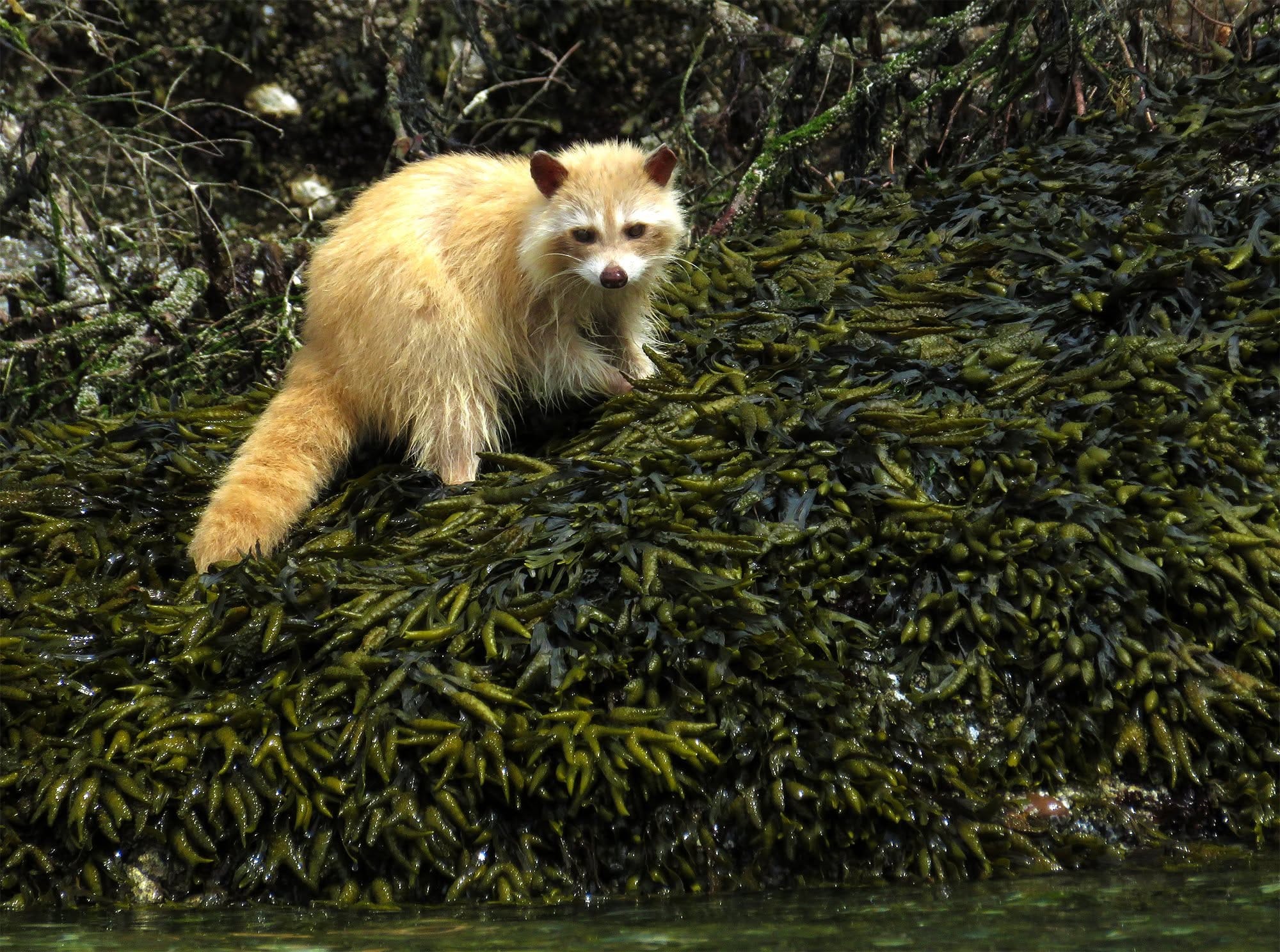
We found a mooring ball—a floating buoy with a length of chain attached to a massive concrete block on the seabed—just off Saysutshan Island. Once secure, we managed a walk in the forest, searching fruitlessly for elusive albino raccoons (okay, technically leucistic raccoons), before taking our small, inflatable dinghy to...The Dinghy Pub for fish and chips.
Never necessary, always accepted with gratitude, no subscription required
Member discussion